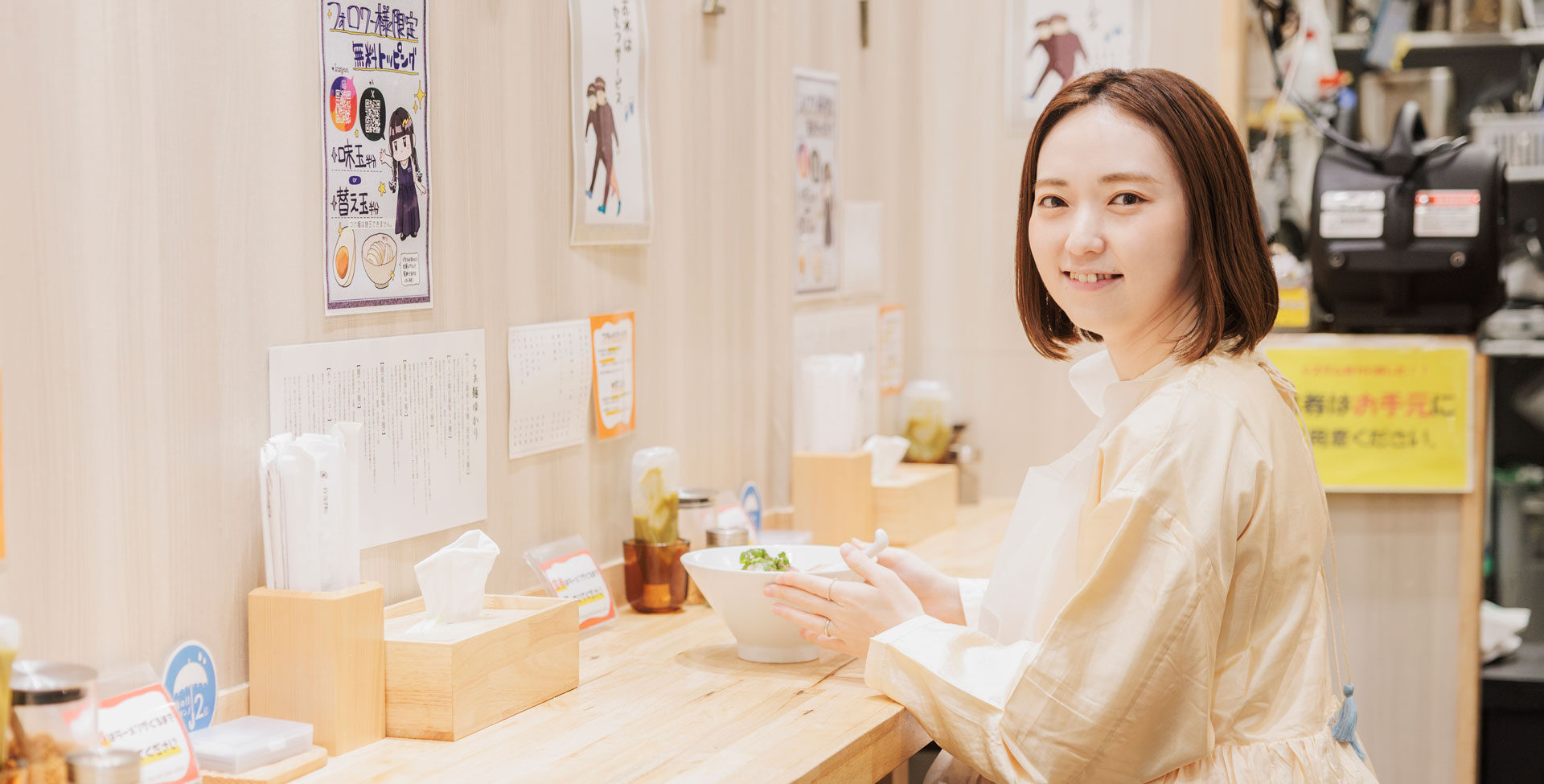
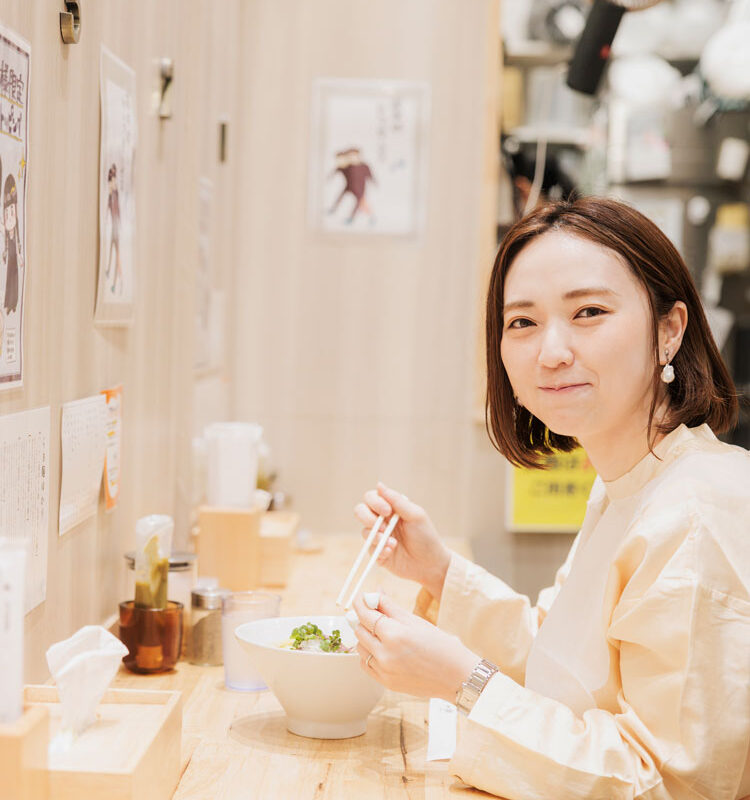
YNK’s Little Happiness Notebook Vol. 3: “Ramen Yukari’s” Chicken White Broth Shio Ramen and the Dreams Packed into This Little Shop
2026.10.20
Oz Magazine, a bimonthly publication, is based on the concept, “If you look up as you walk through the city, you’ll find little moments of happiness all around,” and each issue delivers information on city walks designed to help you have a “great day.”In this series, the editor-in-chief of Oz Magazine—who walks the streets daily in search of small joys—writes about the “small joys” she has discovered in her hometown of Yaesu, Nihonbashi, and Kyobashi, where the magazine’s office has been located for many years.
It’s Friday, marking the end of another week of overtime. As I step out of the office building, I find Kyobashi at night quiet, with fewer people and cars on the streets.Enveloped by the exhaustion and sense of relief that come with the end of the week, I make my way through the darkened skyscraper district toward the station. It’s at times like this, when I spot the lights of “Ramen Yukari” next to the entrance to Takaramachi Station, that I can’t help but find myself drawn inside.
-
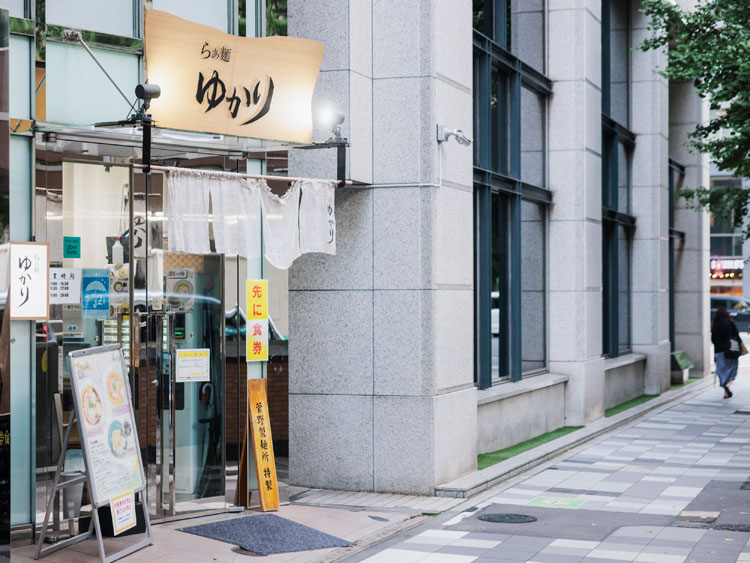
“Ramen Yukari,” located next to Exit A5 of Takaramachi Station
In the Kyobashi business district, it’s great to have a place where you can grab a quick bite to eat alone at night. I’d been curious about what kind of restaurant would open there ever since construction began, so I was really happy when I found out it was a ramen shop.
Once inside, I felt even happier thanks to the bright atmosphere of the white-and-wood-toned interior and the attentive care of the mostly female staff. It’s a ramen shop where even a woman dining alone can feel right at home. And the background music is 2000s J-POP. The music I used to listen to back in middle and high school helped me forget about the work I’d just been doing, and it made me feel somehow at ease.
In the past, they were only open late on Fridays, so I’d sometimes grab ramen before the last train or slip in just in time for the 10:00 PM last call and closing.Time and again, this shop’s warm bowl of ramen saved me from the loneliness of being exhausted and starving.
At the same time, seeing the young staff always working in such a friendly and harmonious atmosphere, and the ramen they serve being so perfectly executed, I’ve often wondered, “Just how is this place run?” I’m looking forward to learning more about that during this interview.
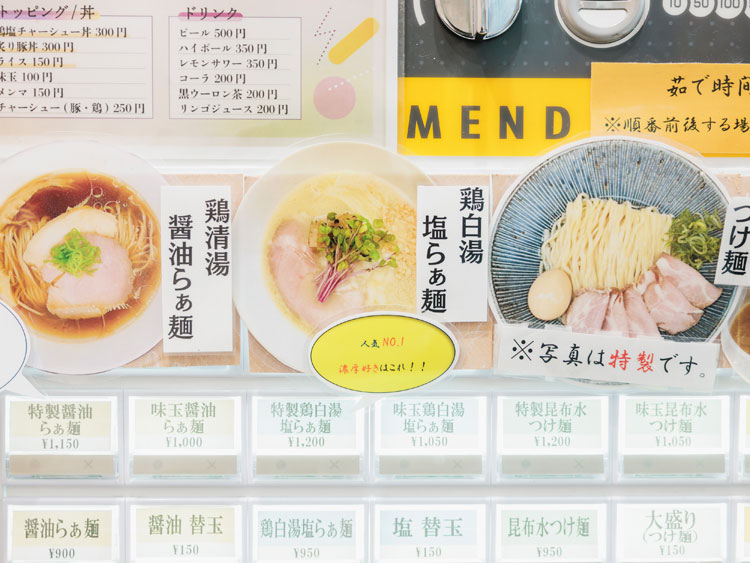
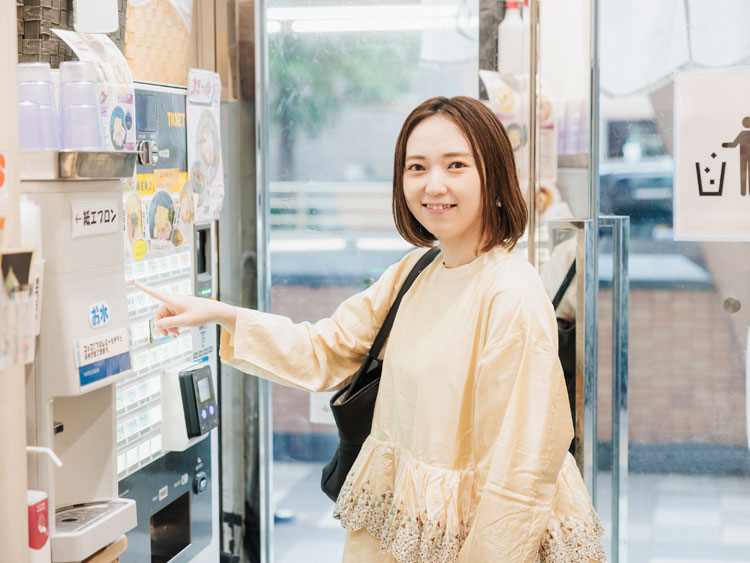
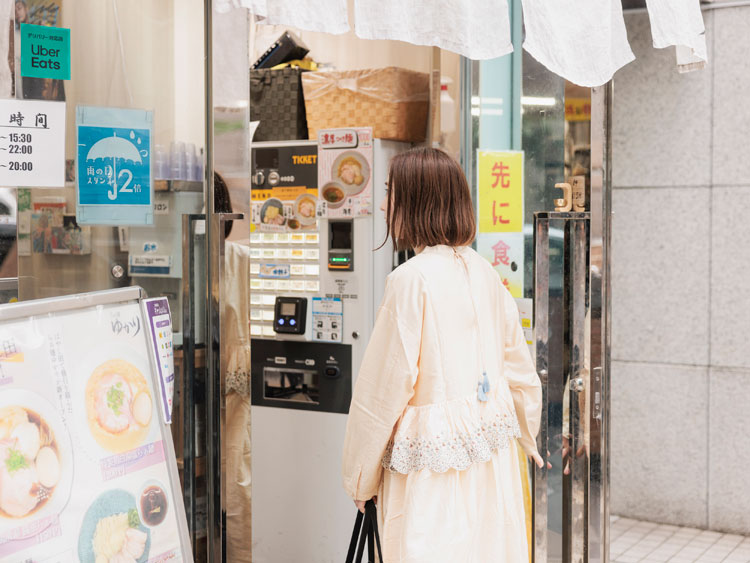
Once inside the restaurant, the first thing to do is buy a meal ticket. While the Special Soy Sauce Ramen and the two types of tsukemen are tempting, as someone who prefers ramen made with a single main ingredient, I always go for the Special Chicken White Broth Salt Ramen, which is based on a chicken bone broth. I’ve heard it’s also the most popular item on the menu.
-
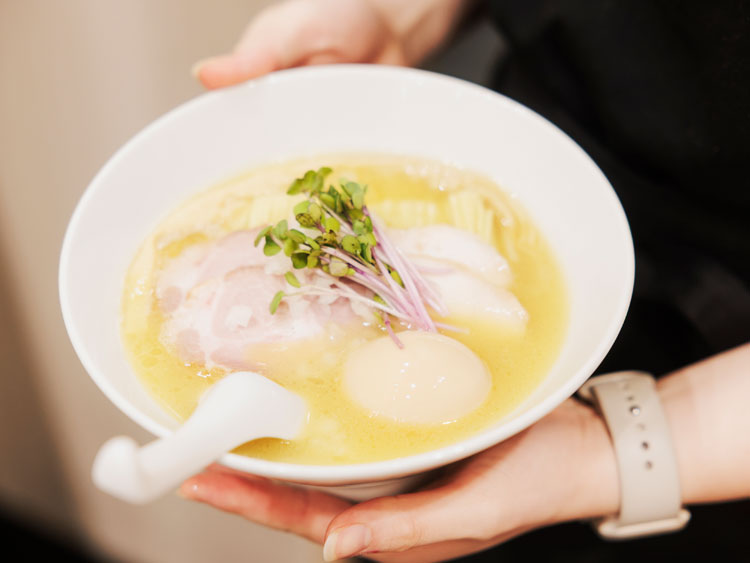
Special Chicken White Broth Salt Ramen: 1,200 yen
After a short wait, the shop manager, Mr. Nozaki, brings me the Shio Ramen with clear broth, and I can’t help but smile.That’s right—this is exactly what I’ve been craving! The beautiful presentation also lifts my spirits.
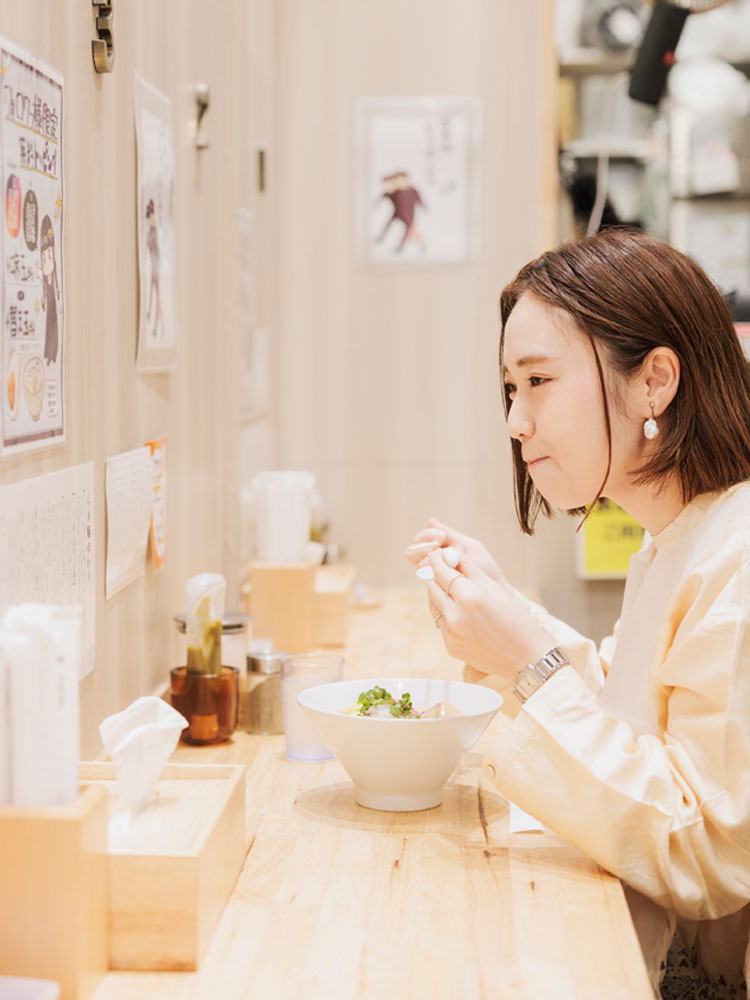
Let’s dig in right away! First, a bite of the noodles. The thick, creamy chicken white broth clings to the firm, thin noodles, and the mellow, rich umami flavor that fills my mouth makes me involuntarily squint my eyes in delight.
Another thing I love about it is that it comes with two kinds of chashu. “We slow-cook a chunk of pork shoulder and domestic chicken breast right here in the store,” says Mr. Nozaki. “It’s very popular because it’s tender and has no gamey taste.” That explains why it’s so moist and tender—it all makes sense now.
-
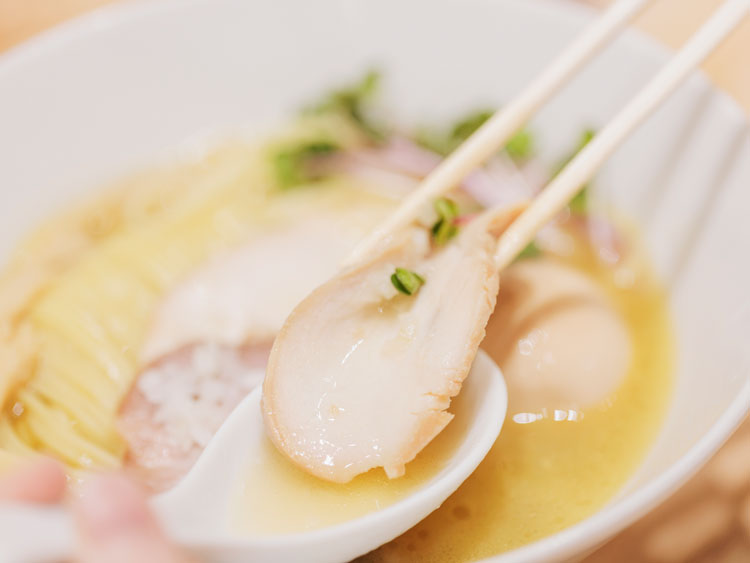
Chashu made from chicken breast. It’s light yet juicy, and tastes even better when dipped in the broth.
As noted on the storefront, this restaurant was developed under the supervision of the popular “Ramen Hayashida,” which has its main branch in Shinjuku. While the soup and noodles are from “Hayashida,” I’m told that the toppings—such as the chashu pork and seasoned eggs—are handmade in-house.
The broth for the Chicken White Broth Shio Ramen is based on chicken bones simmered for a long time. It’s creamy and rich without being too heavy, and I love how it leaves a clean aftertaste.
-
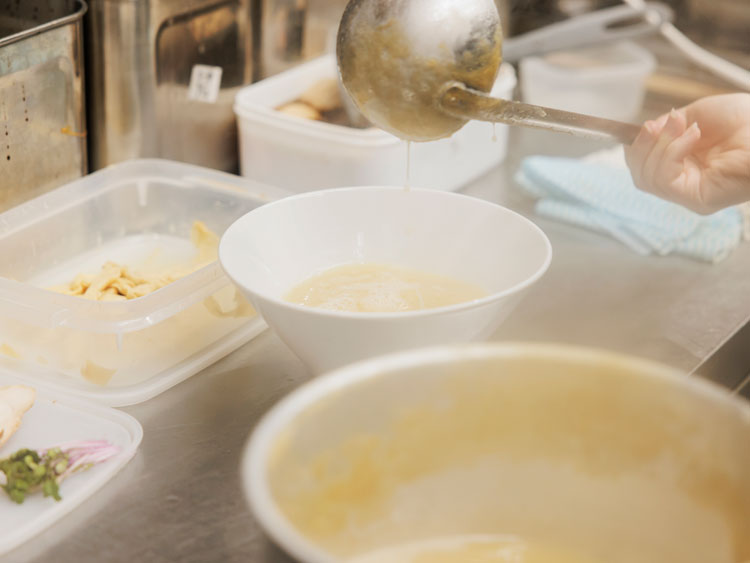
The chicken white soup, made with plenty of chicken bones, is thick and creamy, just like a puréed soup.
The noodles are a special blend from “Sugano Seimenjo,” a name well-known among ramen connoisseurs. Apparently, they use different noodles depending on the dish; for the Chicken White Broth Salt Ramen, they use thin noodles characterized by their firm yet supple texture and subtle sweetness. They go down so smoothly that you’ll find yourself polishing off the whole bowl in no time.
-
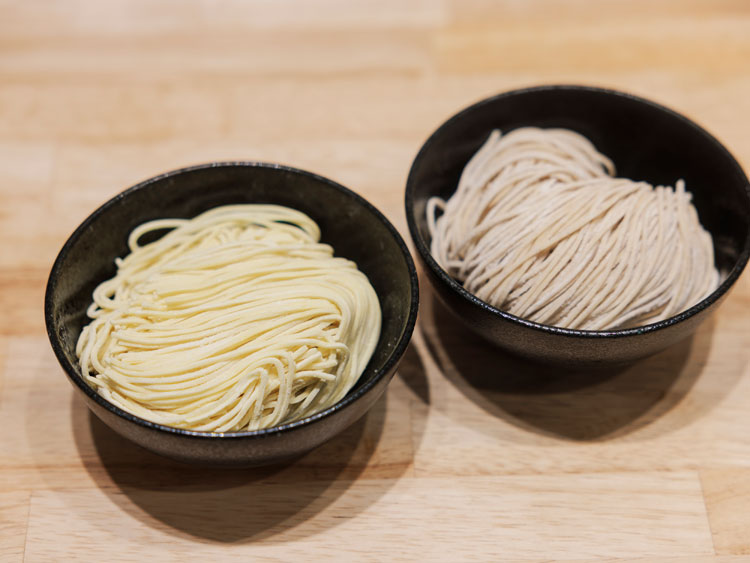
On the left are the noodles for the chicken white broth shio ramen. On the right are the noodles for the shoyu ramen, which are characterized by the flavor of whole wheat and stone-ground flour.
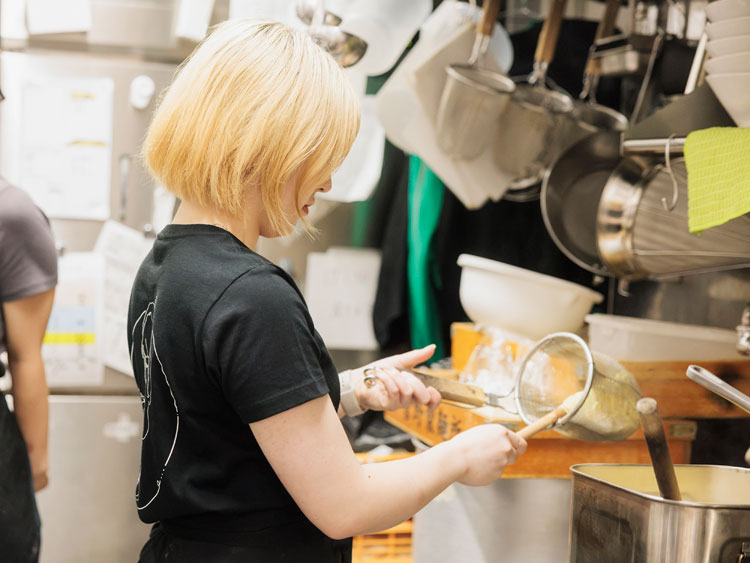
-
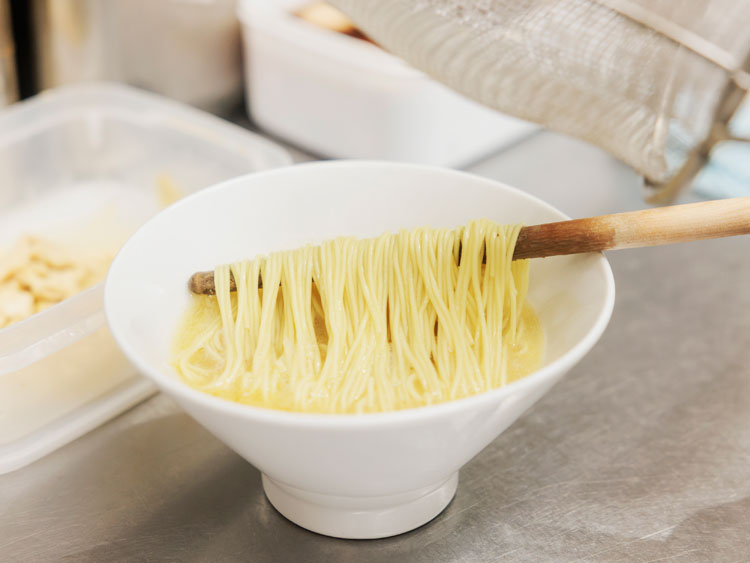
I’m completely captivated by the skill of arranging “mianxian” neatly on the plate.
Mr. Nozaki serves up ramen with deft, skillful movements. Just when I was thinking he must have taken this job because he loves ramen, he said, “I do like ramen, but my original motivation was actually to open my own restaurant.”
-
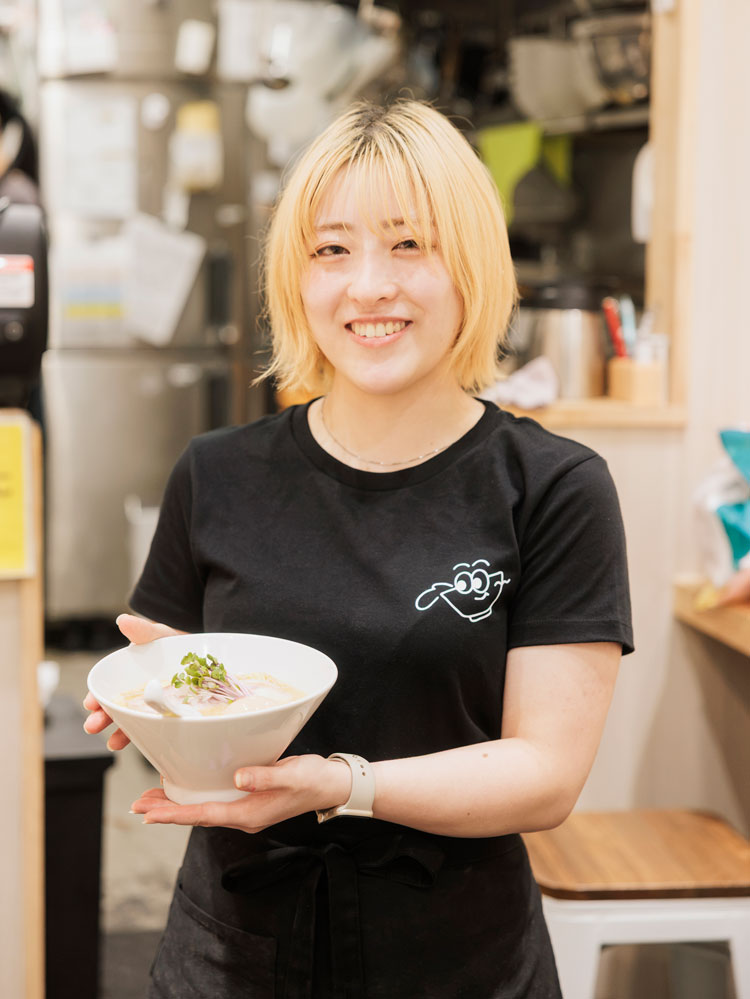
Store Manager Nozaki
Eager to learn how to launch and run a restaurant, he took a part-time job at a company in Tokyo that operates franchises such as the Taiwanese mazesoba restaurant “Menya Kokoro.” As he gained experience working on-site at each new location, he shared his dream of owning his own restaurant with his supervisor—and was eventually entrusted with launching “Ramen Yukari” from the very beginning.
“At first, my younger sister was working there too, so we combined my name, ‘Yuri,’ with hers, ‘Akari,’ to name the shop.We opened in April 2024 with the hope that this ramen would foster good connections (yukari),” says Ms. Nozaki. I’d always thought the shop was simply called “Yukari,” but so that’s how it came to be!
Another thing that caught my eye was the artwork inside the shop. I think this adorable and approachable style also contributes to the cozy atmosphere.
-
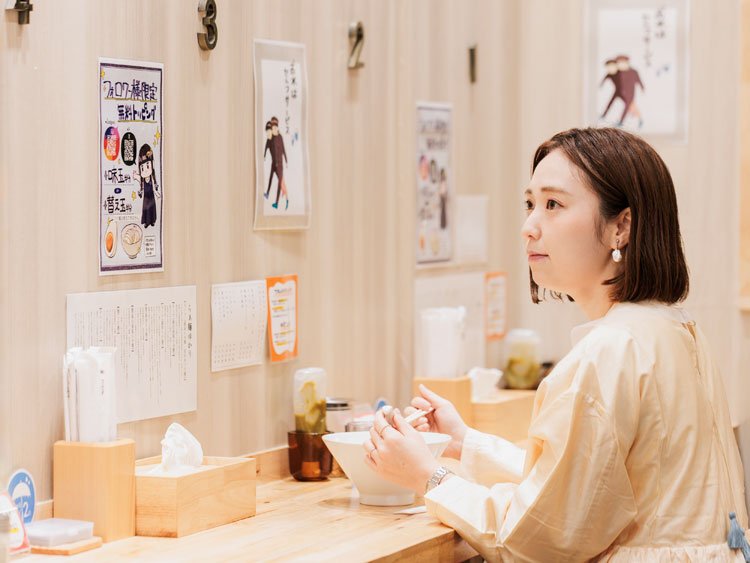
The illustration of the girl on the left has been there since the site opened, so I wondered, “Is this Yukari?”
-
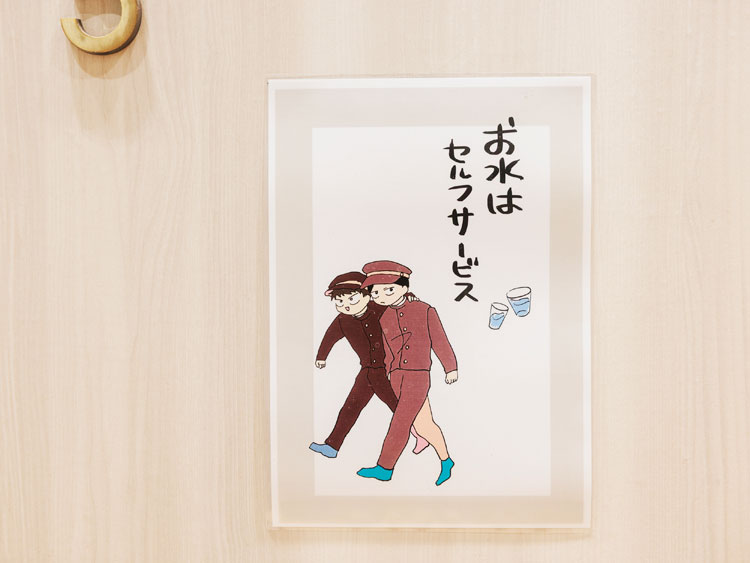
These illustrations were added recently.
“This was drawn by a staff member at our sister restaurant, ‘Menya Kokoro,’ who graduated from art school. It’s so cute that I’ve been using it here, too. By the way, the illustration on the T-shirt I’m wearing right now was drawn by a classmate of mine from high school.”
-
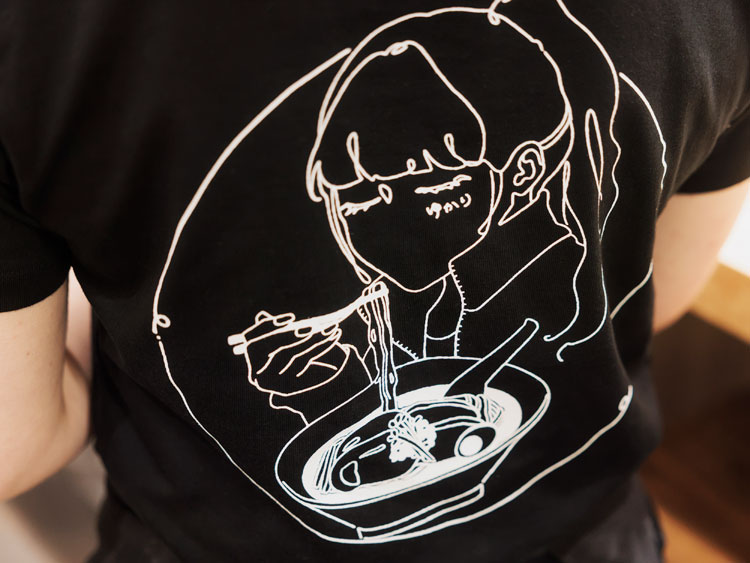
The back print on the staff T-shirt. The way the word “Yukari” is incorporated is so subtle and lovely!
As I looked around the store again, I spotted a familiar logo. It was a business card for “Shokudo Swings” in Hatchobori, a place I’ve actually featured in *Oz Magazine* before. It’s a casual Italian restaurant with delicious food, and I still remember how kind the staff were.Come to think of it, I remember seeing a business card for “Ramen Yukari” at “swings” as well.
-
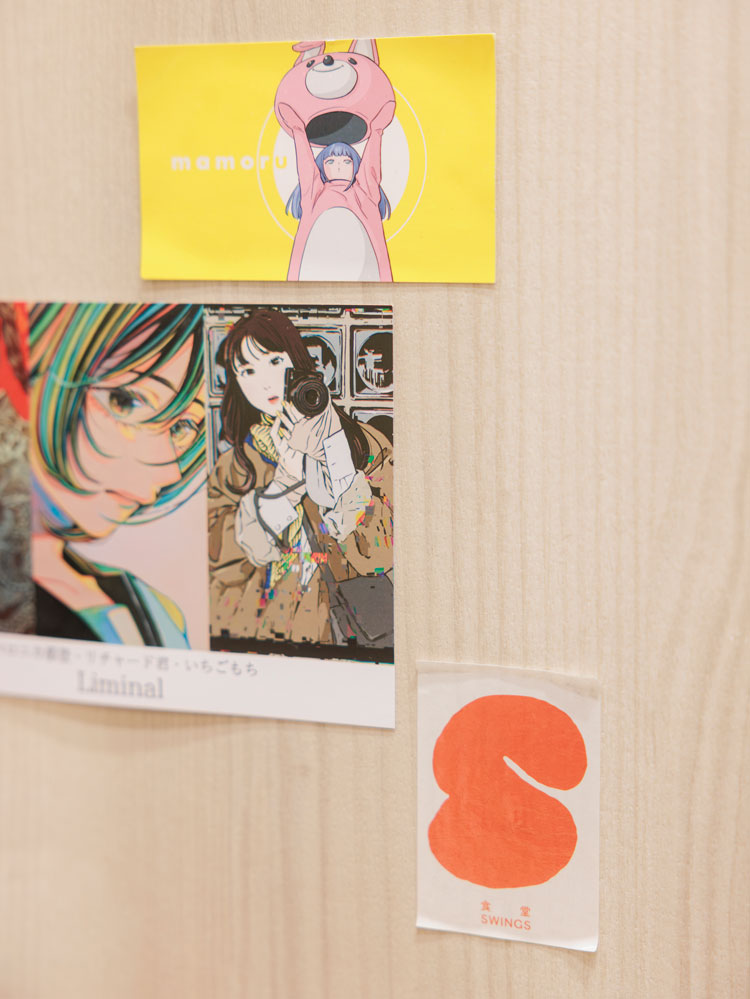
The red logo at the very bottom is the business card for “Shokudo Swings.”
“Actually, ‘swings’ is part of the same chain,” said Ms. Nozaki. “A supervisor who looked out for my siblings and me back when we were at ‘Menya Kokoro’ now works there, so I’ve gone to help out there after closing up shop here.” Who knew there was a connection like that! As I interview various restaurants, discovering these kinds of connections between them might be one of life’s little joys.
“Still, it’s amazing that you work even more after working until 10 p.m.!” the entire reporting team exclaimed in surprise. “I just love talking with customers,” Ms. Nozaki replied with a smile.“We get about 100 customers just for lunch here, but since most of them are on their lunch breaks, there aren’t many opportunities to have a leisurely chat. But to be honest, it’s because I love providing service that I entered the wedding industry in my previous job and the food and beverage industry now.”
-
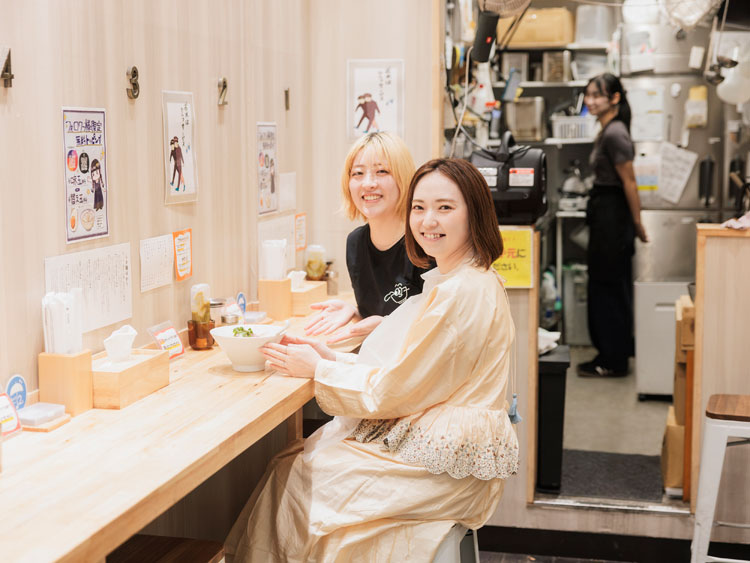
It’s heartwarming to see Mr. Nozaki and the other young staff members working together in such a friendly and lively atmosphere.
“Someday, I’d love to open a restaurant with my family that specializes in the handmade udon my mother makes so well—and hopefully work alongside my former colleagues,” says Nozaki, her eyes sparkling. Who would have thought that such a heartwarming dream was hidden inside this small ramen shop right in the middle of the business district!
Even when you’re completely exhausted after working late, a visit to “Ramen Yukari” can lift your spirits a little. That’s surely not just because of the delicious ramen—it might also be because you can feel the positive energy these women radiate throughout the shop.
Photography by Masahiro Shimazaki
Text by Miyo Yoshinaga


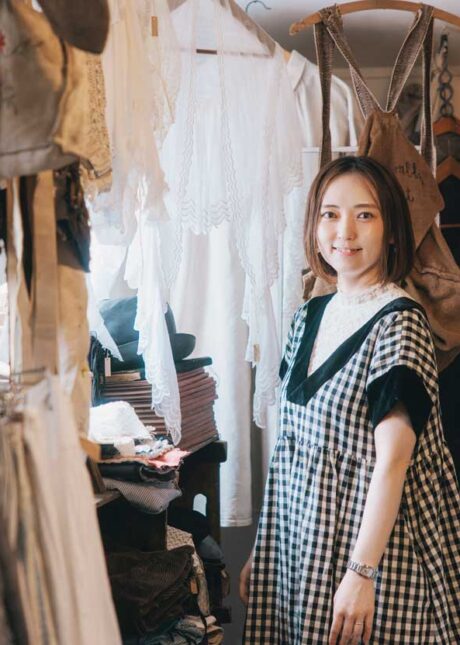

2024年4月より、スターツ出版『OZmagazine(オズマガジン)』編集長。「顔をあげて街を歩けば、小さな幸せがあちこちに」をメッセージに、カフェやパン、雑貨などを切り口に、その街ならではの魅力を発掘する“さんぽのプロ”。自称・パンと文具のマニア。(アイコン写真 撮影:那須野友暉)
WEB:オズマガジン公式WEB
Instagram:@ozmagazine_editors